There’s a moment, somewhere on the marble path climbing toward the Propylaea, when Athens stops being a city and becomes something else entirely. The crowds fade. The heat softens. And suddenly you’re standing where Athenians stood 2,500 years ago, looking out over the same sea, the same hills. No photograph prepares you for it. But a little preparation? That makes all the difference between a transcendent afternoon and a sweaty, overcrowded struggle. This is your honest, practical Acropolis Athens visitor guide — the things a local friend would actually tell you.
When to Go (This Really Matters)
The Acropolis receives over three million visitors a year, and it shows — if you arrive at the wrong time. The peak crush happens between 10am and 2pm, when cruise ship groups and organized tours descend simultaneously. You’ll spend more time navigating selfie sticks than actually seeing anything.
The two golden windows are early morning and late afternoon.
Gates open at 8am. If you’re there at 8:05, you’ll share the site with a handful of other early risers and the cats that live on the hill. The light is soft, the marble almost glows, and you can stand in front of the Parthenon in genuine silence.
The second option is arriving around 4–5pm. The tour groups have retreated to their coaches, the heat has dropped, and the late afternoon sun turns everything amber-gold. If you’re staying nearby — in Plaka or Monastiraki, say — this is incredibly easy to pull off. Stroll up after a long lunch, take your time.
Seasonally, April through June and September through October are the sweet spots. July and August are brutal: 38°C heat on an exposed limestone hill with thousands of other people. If summer is your only option, go at 8am and leave by 10:30. Bring more water than you think you need.
Tickets: How to Skip the Line
The ticket queue at the south entrance can stretch 45 minutes on a busy day. Skip it entirely by booking online in advance at the official Greek e-ticketing portal (etickets.tap.gr). You select a time slot, receive a QR code, and walk straight to the entrance gate. Straightforward, worth the five minutes it takes.
Current pricing (2024): €20 full price, with a reduced rate of €10 for students and seniors. Children under 5 are free. There’s also a combined ticket for €30 that covers the Acropolis plus six other major archaeological sites including the Ancient Agora, the Temple of Olympian Zeus, Kerameikos, and the Roman Agora. If you’re spending more than a couple of days in Athens, this is exceptional value — you’d easily use it.
Free admission days exist: the first Sunday of each month from November through March, and certain national holidays. These days attract crowds, so manage expectations accordingly.
What You’ll Actually See Up There
People sometimes arrive expecting a single monument and leave surprised by how much the hill contains. Here’s a quick orientation so you know what you’re walking into.
The Parthenon
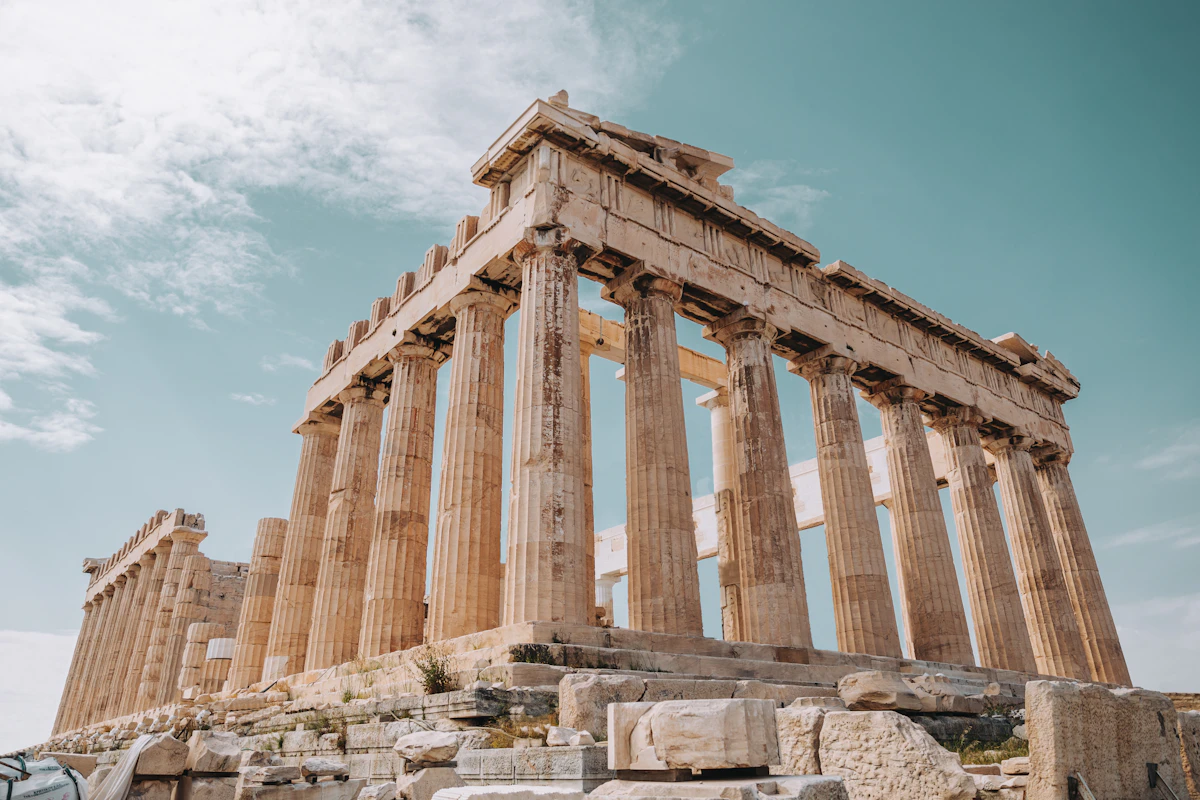
The centerpiece — a temple to Athena built between 447 and 432 BCE. It’s larger than it looks in photos and more damaged than its silhouette suggests. Ongoing restoration work means there are cranes and scaffolding in various corners (this has been true for decades and will continue for decades more). Go anyway. The engineering alone — the subtle curves built into the columns to correct for optical distortion — is worth contemplating.
The Erechtheion and the Caryatids
Northeast of the Parthenon, this smaller temple is where you’ll find the famous Caryatid porch: columns carved in the form of draped female figures. What you see are replicas — five of the originals are in the Acropolis Museum (see below), and one was removed by Lord Elgin to London in the 1800s, a loss the Greeks haven’t forgotten.
The Propylaea
The monumental gateway you pass through to enter the main plateau. Stop and look back from the top — the view over Athens, the Agora ruins below, and the distant mountains is one of the best in the city.
The Temple of Athena Nike
Small, elegant, perched on the southwestern corner of the hill. It’s easy to walk past it quickly, but slow down here. The proportions are perfect, and the position — looking out toward what would have been the harbor at Piraeus — is quietly moving.
The Acropolis Museum: Don’t Skip This
Many visitors climb the hill and call it done. That’s a mistake. The Acropolis Museum, located a five-minute walk from the south entrance, is one of the finest archaeological museums in the world and provides essential context for everything you’ve just seen.
The original Caryatids are here, in a climate-controlled gallery. The top floor aligns architecturally with the Parthenon itself, and the friezes and pediment sculptures on display — what remains of them — are extraordinary. The ground floor has a glass floor through which you can see ongoing excavations. Budget 1.5 to 2 hours. Separate admission is €10 (or included if you’re thinking about the 3-day Athens itinerary as a planning framework).
Practical Details Worth Knowing
Footwear: The ancient marble is polished smooth by millions of feet and becomes treacherous when wet. Avoid flat-soled sandals or anything slippery. Proper walking shoes make a real difference.
Accessibility: There is a lift on the north slope for visitors with mobility needs. The main path, however, involves significant inclines and uneven surfaces.
Photography: No restrictions on personal photography. Drone use is prohibited.
Bags: Large backpacks may be checked. A small daypack is fine.
Water and food: No cafés on the hill itself. Bring water — at least a liter per person in warm months. There are vendors at the base and plenty of options in Psyrri and Monastiraki nearby. The Athens street food guide has solid recommendations for before or after your visit.
The guests who stay with Athenian Ascents often ask us for the honest version of this visit — not the brochure, but the real experience. The answer is always the same: go early or go late, book your ticket in advance, and give yourself more time than you think you need. The Acropolis rewards slowness. This is not a monument you want to rush.
Compare your Athens stay
View our apartments and check the total price and cancellation terms for your dates.