If you’ve ever wondered what it feels like to be part of something ancient and alive at the same time, come to Athens at Easter. This isn’t a holiday that happens behind closed doors or inside a single church — it spills into the streets, fills the air with incense and candle smoke, and pulls the whole city into a collective rhythm that hasn’t changed much in a thousand years. Athens Easter is, by almost any measure, the most important celebration in the Greek calendar, and experiencing it here, in the city where so much of Western civilization was born, is something genuinely difficult to put into words.
Why Easter Matters More Than Christmas in Greece
In Greece, Orthodox Easter — Pascha — is the defining moment of the religious year. Christmas is lovely, but it’s relatively quiet by comparison. Easter is where the full weight of Greek Orthodox tradition comes to bear: weeks of fasting, solemn processions, midnight services lit by candlelight, and finally an eruption of joy on Sunday morning that feels almost physical.
The dates shift each year (the Orthodox calendar calculates Easter differently than the Western one), so it’s worth checking before you book. But whenever it falls, Athens transforms. Shops close, families return from the diaspora, and neighborhoods that are normally tourist-busy suddenly feel genuinely local again.
The Epitaphios: Good Friday’s Most Haunting Procession
The emotional heart of Holy Week is the Epitaphios procession on Good Friday evening. In every church across Athens, a flower-covered bier representing Christ’s funeral shroud is carried slowly through the surrounding streets by the congregation, accompanied by hymns that are mournful and extraordinarily beautiful.
In Plaka and Monastiraki, this procession winds through narrow marble-paved streets that feel designed for exactly this kind of ceremony. The local church of Agios Nikolaos Rangavas in Plaka is one of the oldest in Athens and its procession — small, intimate, candlelit — is something locals genuinely treasure. It moves through the old neighborhood streets past neoclassical facades and flowering jasmine, and the atmosphere is quietly devastating in the best possible way.
If you want something more grand, the procession from the Metropolitan Cathedral (Mitropoli) on Mitropoleos Square is the official Athens ceremony, attended by city officials and dignitaries. Both are worth seeing; they offer completely different experiences of the same sacred evening.
Saturday Night: The Resurrection Service at Midnight
Nothing in Athens prepares you for the midnight Resurrection service — Anastasi — on Holy Saturday. Around 11:30pm, people begin streaming toward churches carrying white candles. By midnight, every church in the city is surrounded by crowds. Then the lights go out completely.
From inside the darkened church, the priest emerges holding a single flame — the Holy Light — and passes it from candle to candle until the entire crowd is holding flickering light in the darkness. At the stroke of midnight, the priest cries “Christos Anesti” (Christ is Risen), the congregation responds “Alithos Anesti” (Truly He is Risen), fireworks erupt across the city, and church bells ring from every direction simultaneously.
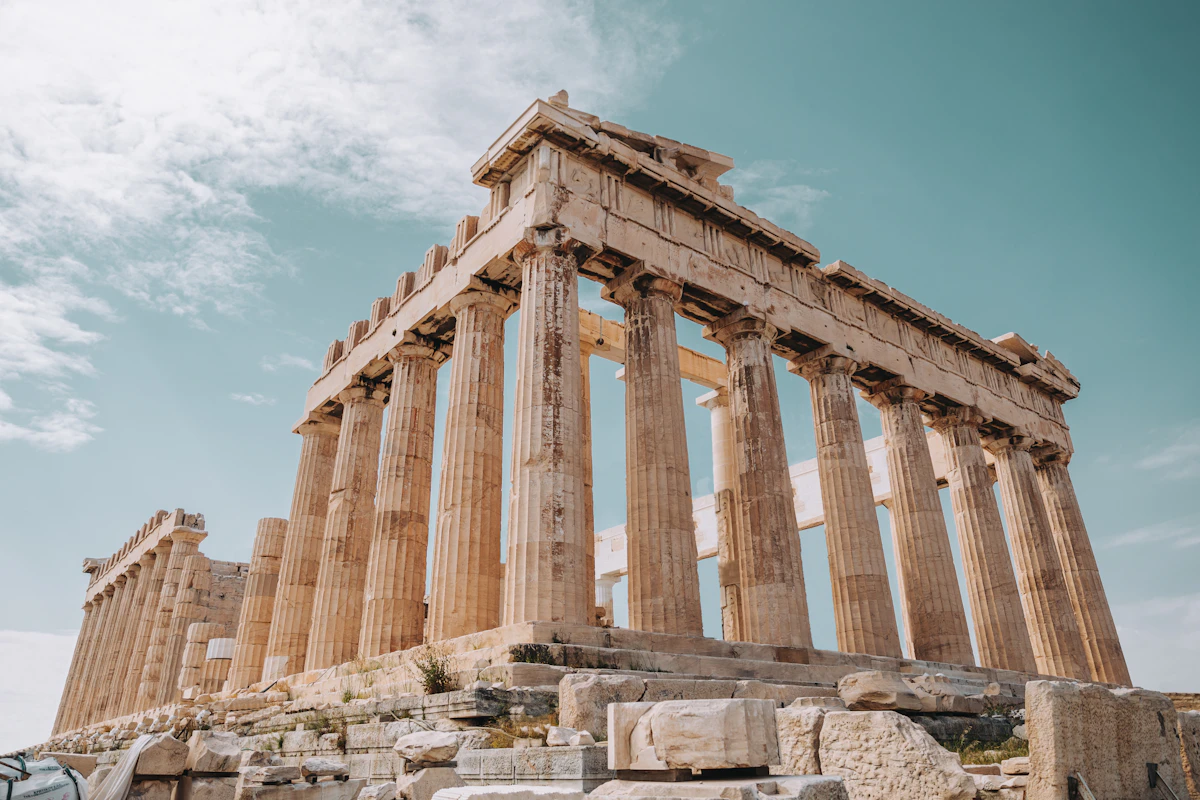
Standing on the slopes below the Acropolis during this moment, with the ancient citadel lit up above and the sound of bells echoing off stone that’s been here for 2,500 years — it’s one of those experiences that stays with you for life. After the service, families traditionally walk home still protecting their candle flame, using it to make a sooty cross above their front door for luck before sitting down to the traditional midnight soup: magiritsa, made from lamb offal and rice, which breaks the Lenten fast.
For anyone staying in the neighborhoods of Plaka or Monastiraki — where guests at Athenian Ascents properties are perfectly situated — you can walk to multiple churches and still be back at your apartment in minutes. There’s no need for taxis on one of the most traffic-heavy nights of the year.
Easter Sunday: The Lamb, the Family, the Feast
Easter Sunday lunch is the centerpiece of the whole celebration, and it’s centered almost entirely on one thing: whole roasted lamb on a spit. If you’re walking through Athens on Sunday morning, you’ll smell the wood smoke before you see anything. Families gather in courtyards, gardens, and rooftops — sometimes even on tiny balconies — rotating lamb over coals from mid-morning onward.
As a visitor, you’re unlikely to be invited into a family home unless you already know locals (though Greeks are famously hospitable, so don’t rule it out). Your best alternative is the tavernas that offer full Easter Sunday lamb menus — many in Plaka and Psyrri book out weeks in advance, so reserve early. Look for places advertising arni souvlas (spit-roasted lamb) rather than regular menus; it’s a seasonal tradition, not something available year-round.
The food that comes with it matters too: kokoretsi (offal wrapped in intestines and spit-roasted — better than it sounds, much better), tsoureki (sweet braided Easter bread with a red-dyed egg baked in), and koularakia (butter cookies) that Greeks have been making since before your grandmother was born.
Practical Things Worth Knowing
Easter week in Athens is not a time for rushing through museums. Many sites have adjusted hours, some shops close for several days, and the city operates on a different rhythm entirely. Lean into it.
Holy Saturday morning is actually an excellent time to visit the Acropolis — crowds are lighter than usual as locals prepare for the evening’s celebrations. Check out our 3-day Athens itinerary for ideas on building your visit around the holiday schedule.
Public transport runs on reduced schedules over Easter, but if you’re based in central Athens near the historic neighborhoods, you genuinely don’t need it. Plaka, Monastiraki, and Psyrri are all walkable to the major procession routes and churches — which is exactly what makes staying here during Easter so worthwhile. For neighborhood context before you arrive, the Monastiraki guide is a helpful primer on one of Athens’ most atmospheric areas.
Come with patience, a good pair of walking shoes, and a willingness to follow the crowd toward the candlelight. Athens at Easter isn’t a spectacle you watch — it’s something you find yourself inside of, whether you planned it that way or not.
Compare your Athens stay
View our apartments and check the total price and cancellation terms for your dates.