Most people write January off when it comes to Athens. “Won’t it be cold?” “Isn’t everything closed?” The truth is, January might be the most underrated month to visit this city — and the travelers who discover that tend to come back every winter. If you’ve been on the fence about an off-season trip, what follows might just tip you over.
What the Weather Is Actually Like
Let’s be honest about Athens in January: it’s mild by most standards, but it’s not the sundrenched Greece of your imagination. Temperatures hover between 8°C and 14°C (46–57°F) during the day, dropping a few degrees at night. You’ll want a proper coat and layers. Rain is possible — January is one of the wetter months — but it rarely comes in heavy, all-day downpours. More often you’ll get a grey morning that clears by noon, or a brief shower that passes before you’ve finished your coffee.
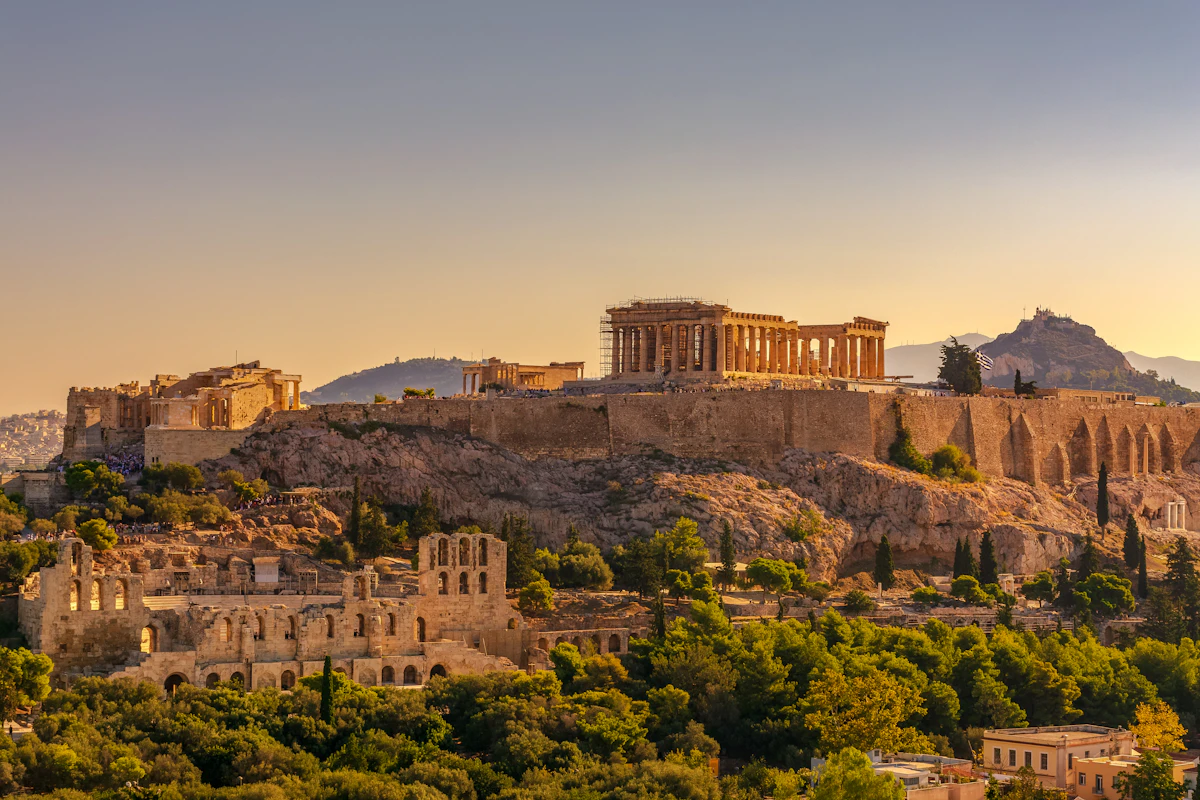
Snow is extremely rare in central Athens, but on a clear January day the light is something special — crisp, low, golden — and the Acropolis against a winter-blue sky looks extraordinary. There are worse places to be cold.
Pack layers, bring a compact umbrella, and wear comfortable waterproof shoes. The city will reward you.
The Crowds (Or Rather, the Lack of Them)
This is the real reason to come in January. The Acropolis in August can feel like a stadium at half-time — shoulder to shoulder, queues snaking down the hill, tour groups in every direction. In January, you can walk up on a Tuesday morning and have the Parthenon practically to yourself. You’ll hear the wind. You’ll actually stop and look.
The same goes for the Acropolis Museum, the National Archaeological Museum, the Ancient Agora. These are world-class institutions that deserve unhurried attention. In January, you can give them that. Museum staff are relaxed, guides are available, and you won’t spend half your visit navigating foot traffic.
Restaurants fill tables without fuss. Taxi lines don’t exist. You can stroll through Monastiraki Flea Market on a Sunday morning — one of Athens’ great sensory experiences — without being swept along by the crowd.
Prices Drop, Noticeably
Hotels, flights, and apartments are meaningfully cheaper in January than at almost any other point in the year. You’re not just saving a little — in many cases, you’re looking at 30–50% less than peak summer pricing for equivalent accommodation. That means you can afford to stay somewhere better, eat somewhere nicer, and generally travel more slowly without watching your budget as anxiously.
The value extends to dining too. Set lunch menus at tavernas that are packed in summer are now leisurely affairs with attentive service. Local restaurants that cater to Athenians rather than tourists — the ones tucked into side streets in Psyrri and Plaka — are exactly as good in January as they are in June, and you’ll actually get a table.
Epiphany and the City in January Mode
The 6th of January is Epiphany (Theofania), one of the most important dates in the Greek Orthodox calendar. In Athens and across the coast, priests bless the waters by throwing a cross into the sea, and young men dive to retrieve it — the swimmer who finds it is said to receive good luck for the year. The main Piraeus ceremony draws a crowd, but smaller versions happen at coastal spots around Attica. It’s genuinely moving to witness and a reminder that Greek culture is about far more than ancient ruins.
After Epiphany, Athens settles into its quieter rhythm. This is when the city really belongs to its residents. The kafeneions (traditional coffee houses) in Monastiraki and Psyrri fill with regulars. Locals do their shopping at the central market on Athinas Street without dodging tourists. The energy is slower, warmer, more intimate. For travelers who want to experience Athens as a living city rather than an open-air museum, January delivers that in abundance.
For more on what makes Psyrri such a rewarding neighborhood to explore in this kind of quiet, local atmosphere, the Psyrri guide is worth reading before you go.
What’s Open (Almost Everything)
One persistent myth about January in Athens is that the city effectively closes. It doesn’t. The major archaeological sites operate on reduced winter hours — the Acropolis typically closes around 3 or 4pm rather than dusk — so you’ll want to plan your days with that in mind, prioritizing outdoor sites in the morning and saving museums for the afternoon. Most restaurants, cafés, and shops are fully open. The famous Sunday flea market in Monastiraki runs year-round.
The exception is some seasonal beach clubs and tourist-facing shops on the islands, but Athens itself has no real off-season shutdown. If anything, the winter calendar has its own appeal — theatre, live music, and cultural events run steadily throughout January, and you’re far more likely to attend something genuinely local than a tourist-oriented show.
Where to Eat and What to Order
Winter is arguably the best season for eating in Athens. The city’s taverna culture comes into its own — lamb stews, slow-cooked chickpea soups, grilled sardines, and fasolada (white bean soup, Greece’s unofficial national dish) are all at their peak. Best restaurants in Plaka are well worth bookmarking, but don’t limit yourself to the neighborhood — wander into Psyrri for meze and wine at a table by a fireplace, or find one of the generations-old tavernas on the edges of Monastiraki that hasn’t changed its menu in decades.
January is also when Athenians consume extraordinary amounts of tsoureki (a sweet enriched bread) and vasilopita — the New Year’s cake that hides a coin inside for luck. Bakeries throughout Plaka and the city center will have it well into January.
A Different Kind of Athens Trip
Athenian Ascents has guests who come in peak season and love it, and guests who come in January and come back every winter. They’re after something different — unhurried mornings at the Acropolis, slow lunches without waiting for a table, evenings exploring neighborhoods that feel genuinely alive rather than curated for visitors. January Athens is that city, offered at its most honest and most affordable. If you’ve been waiting for the right time to go, this might be it.
Book Your Athens Stay Direct — Save 10%
All properties in this guide are managed by Athenian Ascents — boutique apartments in Plaka, Monastiraki, and Psyrri.
📍 Browse all apartments → 💰 Book direct and save 10% vs Airbnb or Booking.com 🏛️ Steps from the Acropolis · Free cancellation available