There’s a version of Athens that most visitors never see — not because it’s hidden, but because they come at the wrong time. Athens in March is that rare sweet spot: the holiday crowds haven’t arrived yet, the light is turning golden and warm, and the city itself seems to be shaking off winter and remembering how good it is to be alive. If you’ve ever wanted to stand at the top of the Acropolis without fighting for space, or sit on a terrace in Plaka with a coffee and actually hear yourself think, March is your window.
It’s also, quietly, one of the most culturally rich months on the Greek calendar. Between the tail end of Apokries carnival, the beloved chaos of Clean Monday, and the first real warmth coaxing café chairs back onto the cobblestones, there’s more going on than you’d expect from a so-called shoulder season.
The Last Days of Apokries: Carnival Greek-Style
March usually opens with the final stretch of Apokries — the Greek Orthodox carnival season that runs for three weeks before Lent. Think of it as Greece’s answer to Mardi Gras, though decidedly more neighborhood-scale and charming for it. You’ll spot kids in costume on the metro, impromptu street performances in Monastiraki Square, and the occasional adult who’s committed a little too enthusiastically to their gladiator outfit.
The energy is lighthearted and very local. This isn’t a packaged tourist spectacle — it’s families celebrating in the streets, tavernas filling up with long lunches, and a general sense that the rules are loosened just slightly. If you happen to catch the final weekend of Apokries, lean into it. Order the loukoumades, find a table outside, and enjoy Athens in a mode that most visitors never encounter.
Clean Monday: Kites Over Filopappou Hill
Then comes one of the most genuinely joyful days in the Greek year. Clean Monday (Katharà Defterà) marks the first day of Lent in the Orthodox calendar, and rather than being solemn, it’s treated as a full national holiday — and an excuse to get outside.
The tradition is kite-flying, and the place to be is Filopappou Hill, just a short walk from the Acropolis. By mid-morning on Clean Monday, the sky above the hill is a patchwork of color — hundreds of kites launched by families, couples, and groups of friends who’ve claimed their patch of grass and packed a picnic. The food is specific: no meat, no animal products (it’s the start of the Lenten fast), but the spread is genuinely delicious. Expect lagana flatbread, taramosalata, olives, grilled octopus, halva, and plenty of ouzo. Many tavernas in Plaka and Psyrri put out special Clean Monday menus — it’s worth booking ahead for one of them.
The atmosphere on Filopappou that day is unlike anything else. Locals of every age, the city in a good mood, the Acropolis looming over everything in the background. It’s the kind of experience that makes you understand why people fall in love with Greece.
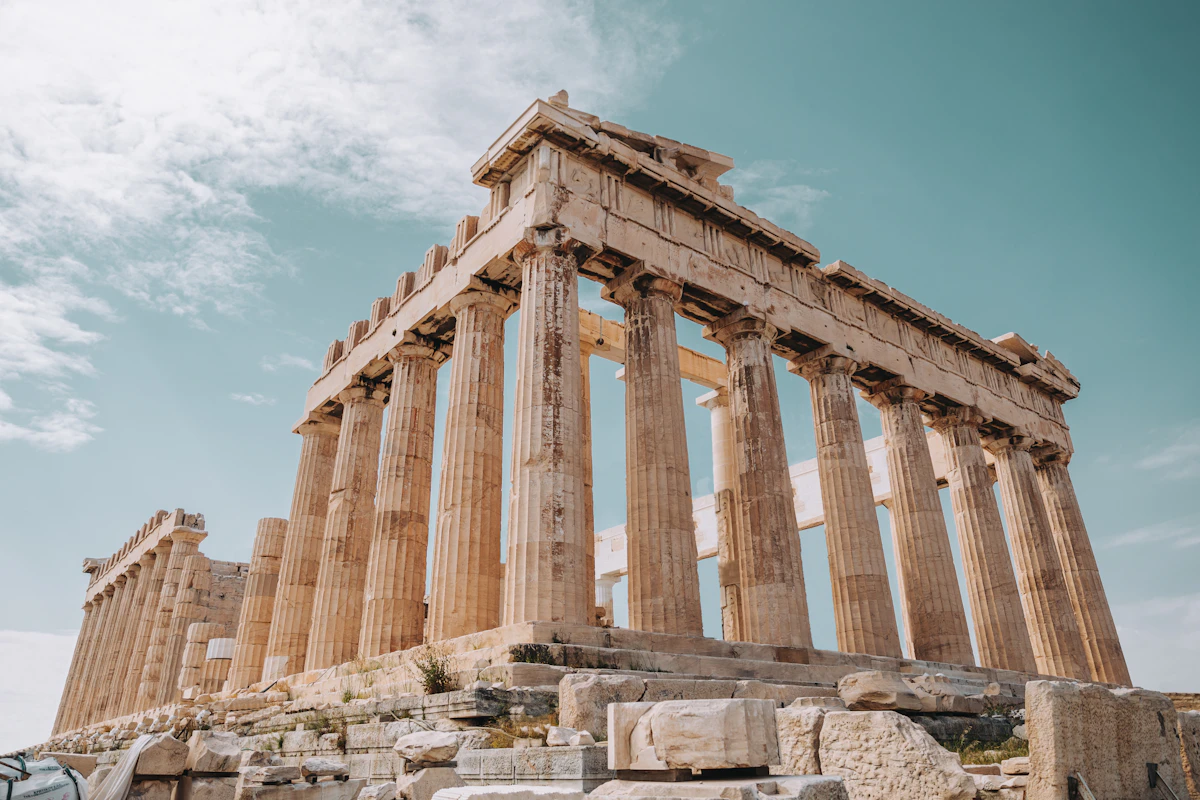
The Acropolis Without the Crowds
Here’s the practical magic of March: the Acropolis is genuinely manageable. In July and August, the site can host thousands of visitors simultaneously — queues at the entrance, bottlenecks on the Propylaea steps, and the distinct impression that you’re at a theme park rather than one of civilization’s most significant monuments.
In March, you can arrive at opening time (8am) and have long stretches where it’s just you, the ancient stones, and the view across the city. The light in early spring is exceptional — softer than summer, with a clarity that makes photographs look effortless. Temperatures typically range from 10°C to 17°C, which is ideal for walking; cool enough to stay comfortable on a long climb, warm enough that you don’t need a heavy coat.
The same logic applies to the Agora, the Kerameikos cemetery, and the National Archaeological Museum — all significantly less crowded than they’ll be in two months’ time. If you’ve been putting off Athens because you heard the sites were overwhelming, March is your reassurance that they don’t have to be.
Spring Terraces and the City Coming Alive
By mid-March, something shifts in the neighborhoods. The café owners in Plaka start dragging their chairs back outside. The restaurant in Monastiraki that had its terrace closed since November suddenly has the heaters on and a chalkboard menu propped up on the cobblestones. It’s not the full bloom of April yet — you might still need a light jacket in the evenings — but the city is clearly in transition, and that energy is infectious.
This is a wonderful time to wander without a fixed agenda. The hidden gems in Plaka are at their most accessible — the tiny courtyard tavernas, the bougainvillea just starting to bud on the neoclassical walls, the stretches of Adrianou Street that are almost quiet in the morning. Monastiraki’s flea market feels unhurried. Psyrri’s coffee shops have regulars back on the pavements.
For a practical 3-day Athens itinerary, March is ideal precisely because you can pack in both cultural sites and neighborhood exploration without feeling rushed or overheated.
Day Trips That Work in March
One underrated bonus of a March visit is early access to the day-trip circuit before it gets congested. The drive to Cape Sounion — with the Temple of Poseidon perched dramatically over the sea — takes about an hour from central Athens and in March you’ll likely have the clifftop nearly to yourself. Nafplio, the beautiful neoclassical port town in the Peloponnese (roughly two hours by car or bus), is spectacular in spring light and completely free of the summer tour buses.
Having a central apartment as your base makes all of this straightforward. The team at Athenian Ascents keeps properties in Plaka, Monastiraki, and Psyrri — all within walking distance of the Acropolis and within easy reach of the bus and metro connections you need for day trips. Shoulder-season pricing in March means you get more space and better locations for significantly less than peak summer rates.
Why March Might Be Athens at Its Best
Athens in March asks something of you: a little flexibility, a willingness to experience a city that’s still partly in its own rhythm rather than performing for visitors. In return, it gives you genuine encounters, uncrowded mornings at ancient sites, one of the most charming national holidays in Europe, and the particular pleasure of watching a great city slowly warm up for the season ahead. Come in March, and you’ll spend the rest of the year telling people they’re going at the wrong time.
Book Your Athens Stay Direct — Save 10%
All properties in this guide are managed by Athenian Ascents — boutique apartments in Plaka, Monastiraki, and Psyrri.
📍 Browse all apartments → 💰 Book direct and save 10% vs Airbnb or Booking.com 🏛️ Steps from the Acropolis · Free cancellation available