There’s a version of Athens that most tourists never see — not because it’s hidden, but because they visit at the wrong time. By November, the summer crowds have dissolved, the rooftop bars have thinned out, and the city exhales. The locals reclaim their streets. The tavernas fill up with Athenians again, not tour groups. And the light — that famous Attic light — turns golden and cinematic in a way that July’s harsh midday glare simply can’t match. Athens in November is one of Europe’s most underrated travel experiences, and the people who’ve figured this out tend to come back every year.
What the Weather Actually Feels Like
Forget the assumption that November means cold and grey. Athens in November sits comfortably between Mediterranean autumn and a very mild winter. Daytime temperatures typically hover around 16–20°C (60–68°F) in the first half of the month, dropping slightly to 13–17°C toward the end. Rain is more likely than in summer, but it usually comes in short, dramatic bursts rather than all-day drizzle — you’ll rarely lose an entire day to it.
For packing, think layers rather than bulk. A lightweight jacket, a couple of long-sleeved tops, and one proper mid-layer will cover almost every situation. Comfortable walking shoes are non-negotiable (Athens is a walking city), and a compact umbrella is worth throwing in the bag. Leave the heavy winter coat at home — you genuinely won’t need it.
The softer light and cooler air actually make sightseeing more enjoyable. Walking uphill to the Acropolis in 35°C summer heat is an endurance test. In November, it’s a pleasure.
The Monuments Without the Masses
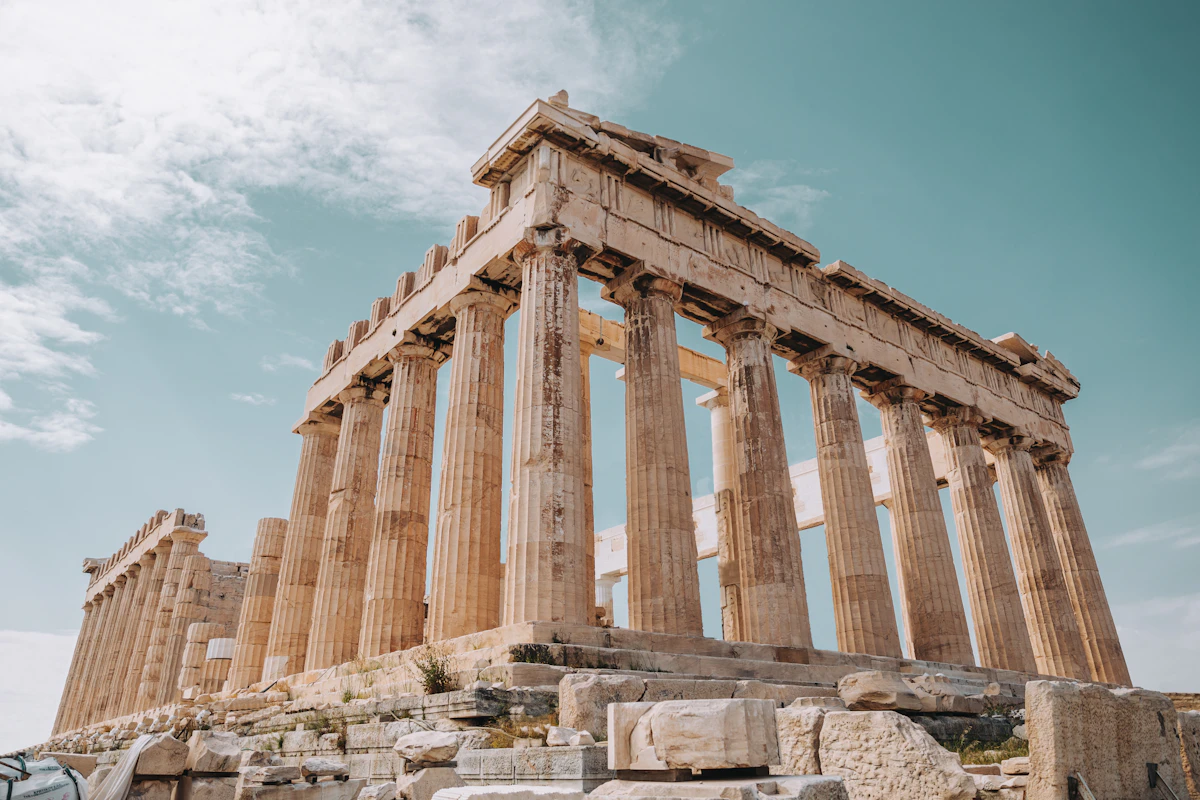
Summer queues at the Acropolis can stretch for over an hour before you even reach the entrance gate. In November, you can walk up, buy your ticket, and be standing in front of the Propylaea within minutes. The difference is genuinely staggering — the kind of thing that changes how you experience one of the world’s great monuments.
The same goes for the Ancient Agora, which is arguably the more atmospheric site and tends to be overshadowed by its famous neighbour. In November, you can wander through the ruins of what was once the civic heart of ancient Athens — past the Temple of Hephaestus (one of the best-preserved ancient Greek temples anywhere), through the old marketplace — with almost no one else around. It rewards slow exploration, and slow exploration is exactly what this month allows.
Inside, the museums are equally transformed. The Acropolis Museum — a genuinely world-class space with original friezes and artefacts displayed at eye level — can be a scrum in summer. In November, you can sit with the Caryatids for as long as you like. The National Archaeological Museum, home to the Antikythera Mechanism and the Mask of Agamemnon, is similarly uncrowded. These are places that deserve time, not a hurried shuffle.
Seasonal Food That You Can Only Find Now
November marks the beginning of one of Athens’s most sensory seasons. As temperatures drop, street vendors appear on corners throughout Monastiraki and Plaka with small charcoal braziers, selling freshly roasted chestnuts in paper cones. It’s one of those small, specific pleasures that immediately makes a city feel real — warm nuts in your hands as you wander through ancient neighbourhoods.
It’s also the start of olive harvest season across Greece, which means early-harvest olive oils begin appearing in delis and food shops. If you’re staying for a few days, it’s worth seeking out a specialist food shop in Monastiraki and picking up a bottle of fresh oil — the flavour difference compared to what you find on supermarket shelves elsewhere in Europe is remarkable.
The menus in tavernas shift too. Heartier dishes come into their own: slow-braised lamb, bean soups, seasonal greens like horta dressed in lemon and oil. The city eats differently in November, and eating alongside locals rather than competing with tourist menus is one of the quiet rewards of this time of year. For inspiration on where to eat, the best restaurants in Plaka are worth exploring before you arrive.
How the Neighbourhoods Feel This Time of Year
The character of Athens’s central neighbourhoods shifts noticeably in November. Plaka — the oldest continuously inhabited neighbourhood in Europe, climbing the northern slope of the Acropolis Hill — becomes genuinely tranquil. The souvenir shops are still open, but the desperate summer hustle eases. You can walk its narrow, bougainvillea-draped streets at your own pace and actually hear your own footsteps.
Monastiraki feels different too. The famous flea market continues every Sunday, but with a mix that tilts back toward locals browsing for vintage finds rather than tourists looking for magnets. The square itself, usually gridlocked with visitors in summer, has room to breathe. If you’re planning to explore the area in depth, the Monastiraki guide covers the neighbourhood’s best spots in detail.
Psyrri, immediately north of Monastiraki, arguably benefits most from the off-season shift. This is the neighbourhood that Athenian night-life inhabits — small bars, live music venues, honest tavernas with handwritten menus — and it functions best when it’s operating for locals rather than tourists. November is exactly that moment.
The Practical Case for November
Beyond atmosphere and access, the numbers make sense. Flights to Athens in November are consistently cheaper than summer equivalents — sometimes dramatically so. Accommodation rates drop significantly across the board, which means centrally located apartments that might stretch the budget in July become genuinely affordable.
This is where being central pays dividends. Staying within walking distance of the Acropolis, the Agora, Monastiraki, and Psyrri means you’re never paying for taxis or navigating public transport — everything is simply out the door and downhill. The team at Athenian Ascents positions all seven of its apartments exactly here, in Plaka, Monastiraki, and Psyrri, which makes the November value proposition particularly sharp: a high-quality, centrally located base at shoulder-season prices.
For anyone planning their first visit or returning after a summer trip that felt slightly crowded, November offers Athens in a different key. Quieter, warmer than expected, golden-lit, and full of exactly the kind of detail — a chestnut vendor, an empty temple, a proper neighbourhood taverna — that makes a city stick with you long after you’ve come home.
Book Your Athens Stay Direct — Save 10%
All properties in this guide are managed by Athenian Ascents — boutique apartments in Plaka, Monastiraki, and Psyrri.
📍 Browse all apartments → 💰 Book direct and save 10% vs Airbnb or Booking.com 🏛️ Steps from the Acropolis · Free cancellation available