Every Athens visitor eventually arrives at the same crossroads: July or August? Both months deliver the blazing Greek summer you’re imagining — the white marble glowing gold at sunset, the smell of jasmine and grilled octopus drifting through narrow streets. But make no mistake, these two months have genuinely different personalities, and choosing the right one can mean the difference between a dream trip and a sweaty, overcrowded ordeal. Here’s what your travel agent probably won’t tell you.
The Temperature Reality: Hot, Hotter, and “Is This an Oven?”
Athens in July is hot — typically 32–36°C (90–97°F) — but it’s the kind of heat that’s still manageable if you plan your sightseeing intelligently. Mornings before 10am are genuinely pleasant, especially in shaded neighborhoods like Plaka where the old stone buildings and narrow alleyways trap cooler air overnight.
August is a different beast entirely. Temperatures regularly push past 38°C (100°F), and the city radiates stored heat even after dark. The famous meltemi winds do provide some relief — a dry northern breeze that picks up in August and can actually make coastal areas feel more bearable. In Athens proper, though, you’ll mostly just feel like you’re standing in front of a hair dryer.
Practical verdict on temperature: July wins, narrowly. The heat is intense but manageable. August heat is intense and unrelenting.
Crowds: The Acropolis Math
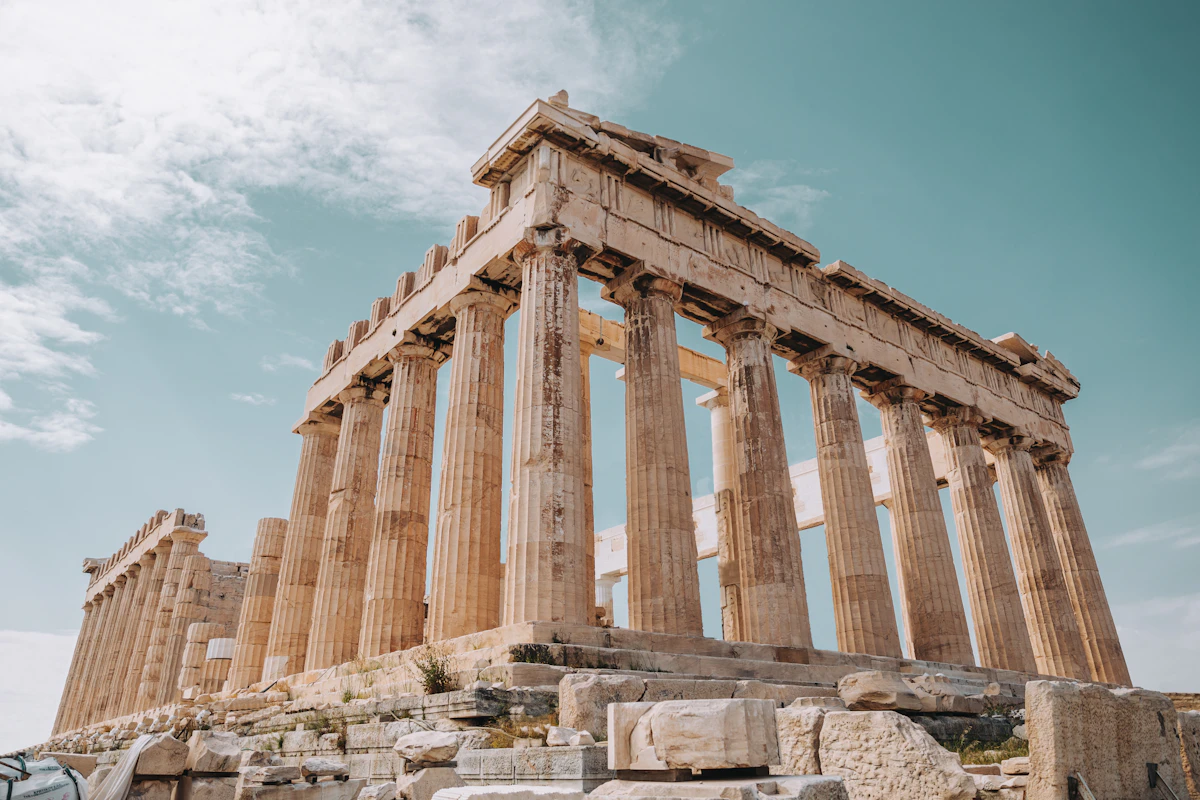
Here’s a number worth knowing: the Acropolis sees roughly 1.5 to 2 million visitors over the summer months. July is crowded — there’s no sugarcoating it. But August? That’s when the entire continent of Europe seems to converge on Athens simultaneously, joined by travelers from the US, Asia, and Australia all on their summer calendars at once.
The practical difference shows up in queue times. A July morning visit to the Acropolis (gates open at 8am) with a pre-booked timed entry slot means maybe 20–30 minutes before you’re moving freely among the ruins. In August, even with timed entry, expect crowds thick enough that you’re jostling for photos near the Propylaea.
The same logic applies to Monastiraki Flea Market, the Plaka tavernas, and every rooftop bar with an Acropolis view. July crowds are real. August crowds are relentless. If you want some breathing room in this ancient city, July is the better bet.
For tips on what to explore beyond the obvious tourist trail, our guide to hidden gems in Plaka is worth reading before you arrive.
The August Paradox: When Athenians Leave
Here’s something counterintuitive that most guidebooks miss entirely: August is simultaneously the most tourist-packed and the most eerily empty month in Athens. That’s because around August 15th — the Feast of the Dormition of the Virgin Mary, one of the biggest holidays in the Orthodox calendar — a huge portion of Athens’ 3.5 million residents pack up and leave for the islands.
What you’re left with is a strange, almost post-apocalyptic version of the city. The neighborhood bakeries close. The beloved local taverna your neighbor recommended shuts its doors until September. Entire blocks in Exarchia and Pagrati go quiet. Some smaller family-run restaurants in Psyrri vanish for the month entirely.
This isn’t necessarily bad. The tourist infrastructure (the restaurants in Monastiraki, the cafes in Plaka) stays fully operational. But if you came hoping to experience authentic Athenian daily life — locals arguing over backgammon at the kafeneio, grandmothers doing their morning shopping at the laiki market — you’ll find much more of that energy in July, when the city still belongs to its residents.
Prices and Availability: What the Algorithms Don’t Show You
The pricing gap between July and August is real, though it depends heavily on where and how you book. Generally speaking, late July sees prices begin creeping upward as August demand builds, and the first two weeks of August command peak prices across virtually every accommodation category.
Book direct when you can — Athenian Ascents properties in Plaka and Monastiraki are 10% cheaper when booked directly at www.athenianascents.com compared to the major platforms, which adds up meaningfully over a week’s stay.
If budget is a real priority, early-to-mid July offers the sweet spot: summer weather is fully arrived, the city is lively, and prices haven’t yet hit their absolute ceiling. Late August, surprisingly, can also soften slightly as the school year approaches and family travel drops off.
Festivals and Cultural Events
July edges ahead here too, in terms of variety. The Athens Epidaurus Festival runs throughout both months, bringing world-class theater, opera, and dance performances to the ancient Odeon of Herodes Atticus — one of the most atmospheric concert venues on earth, with the Acropolis literally lit up above the stage. Booking early for these is essential.
July also sees a fuller calendar of neighborhood events, open-air cinema screenings (a wonderful Greek summer tradition — the therina cinema under the stars), and various street festivals in Psyrri and Monastiraki.
August is excellent for one thing: the Assumption Day celebrations on August 15th are genuinely moving if you’re near a church, and the emptying-out of the city gives August a strange, quiet magic that some travelers absolutely love. If you want Athens with fewer Athenians but more international energy, August delivers exactly that.
So Which Month Is Right for You?
Here’s the honest breakdown:
Choose July if you’re… a couple wanting romantic evenings on a rooftop terrace, a family trying to keep logistics manageable, a first-timer who wants to experience Athens as a living city rather than a tourist theme park, or anyone with even mild heat sensitivity.
Choose August if you’re… a budget traveler flexible with dates who can find a last-minute deal, someone who genuinely loves the peculiar quietness of a major city on holiday, or a night owl who thrives in a city that runs entirely on tourist-hour schedules.
Both months reward smart planning. Book your Acropolis tickets months in advance. Stay in a neighborhood like Plaka or Monastiraki where you can walk everywhere and retreat to your apartment during the brutal midday heat — our guide to walking to the Acropolis will help you plan those morning runs perfectly.
Whichever month you choose, Athens in summer is unlike anywhere else on earth. Just go in with your eyes open — and an excellent apartment to retreat to.
Book Your Athens Stay Direct — Save 10%
All properties in this guide are managed by Athenian Ascents — boutique apartments in Plaka, Monastiraki, and Psyrri.
📍 Browse all apartments → 💰 Book direct and save 10% vs Airbnb or Booking.com 🏛️ Steps from the Acropolis · Free cancellation available