Athens has always been a city of layers — ancient stone beneath Byzantine churches beneath Ottoman fountains beneath modern concrete. But walk through the right neighborhoods on any given morning, and you’ll find another layer entirely: vivid, chaotic, occasionally heartbreaking street art that turns blank walls into open-air galleries. Athens street art isn’t a recent import or a tourist gimmick. It grew from genuine political upheaval, economic crisis, and a generation of artists who had nothing but spray cans and something urgent to say. Knowing where to look — and what you’re looking at — changes the whole experience.
Why Athens Became a Street Art Capital
The 2008 financial crisis cracked Athens open. Abandoned storefronts, shuttered businesses, and a generation of young Greeks facing unemployment and austerity created the conditions for an explosion of public art. Walls that had once been plastered with political slogans became canvases for murals that were more ambitious, more technically refined, and more emotionally complex than anything the city had seen before.
By the early 2010s, international artists were making pilgrimages to Athens specifically because of the freedom here — the relative tolerance, the abundance of blank surfaces, and the energy of a city working through something difficult in real time. Today that tradition continues, and the neighborhoods of Psyrri and Exarchia remain the twin epicenters of the scene.
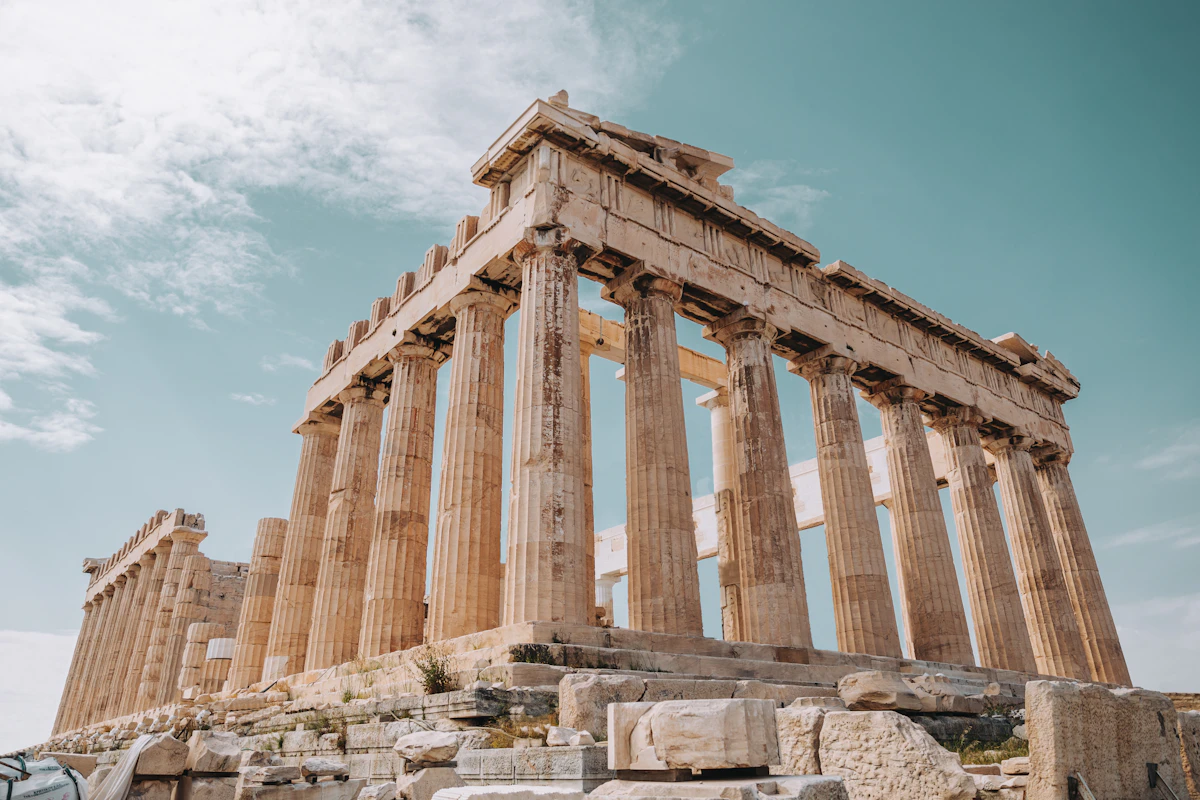
The contrast between ancient and contemporary Athens is never sharper than when you’re standing in front of a six-story mural in Psyrri with the Acropolis visible over the rooftops behind it. That tension — old and new, official and unofficial, marble and spray paint — is exactly what makes the city so visually alive.
Psyrri: Where the Scene Started
Psyrri was a working-class neighborhood of workshops, small factories, and warehouses long before it became a nightlife district. Those industrial buildings — with their wide, flat facades — turned out to be perfect canvases. Today, almost every block holds something worth stopping for.
Key Walls and Artists to Know
Start at Plateia Iroon (Heroes’ Square), which functions as an unofficial gallery hub. The square itself is surrounded by layers of paste-ups, stencils, and full murals that get repainted every few months. It’s worth coming back to — what was here last spring may be gone, and something new may have taken its place.
From there, wander south toward Miaouli Street and the surrounding blocks. Look for work by INO, one of Greece’s most internationally recognized street artists. His large-scale portraits — often in muted tones with deeply emotional expressions — have appeared on walls across Athens and in cities from New York to Berlin. His figures tend to be solitary, introspective, and painted with a photorealist quality that stops people mid-stride.
Sonke is another name to watch for in Psyrri. His work tends toward the more abstract and typographic, playing with Greek letters and Latin script in ways that feel like visual music. On the smaller streets branching off Ermou, you’ll often find collaborative pieces where multiple artists have worked on the same wall.
Check out Sarri Street for sheer density — it’s one of those blocks where almost nothing is left unpainted. The layering here tells a story of the neighborhood itself: older pieces visible beneath newer ones, styles clashing and sometimes harmonizing in ways nobody planned.
For a deeper dive into what makes this neighborhood tick, the Psyrri guide is genuinely useful for understanding the neighborhood’s character beyond just the art.
Exarchia: Rougher, More Political
If Psyrri has become more polished — galleries alongside the murals, craft cocktail bars beneath the paste-ups — Exarchia remains emphatically raw. This is Athens’s historically anarchist neighborhood, dense with universities, left-wing bookshops, and a political energy that never really dissipated. The street art here reflects that.
The Walk Through Exarchia
Begin at Exarchia Square itself, which is ringed with political stencils, multilingual slogans, and the kind of art that’s explicitly in conversation with specific events — a protest, a police action, a court verdict. The work here updates faster than anywhere else in the city, sometimes overnight.
Walk up Themistokleous Street toward Strefi Hill. The residential buildings on either side offer a rotating gallery of murals that range from anarchist symbolism to surprisingly tender portraits of neighborhood figures. The hill itself, a scrubby park above the neighborhood, offers one of the better views of the city — and the contrast between the chaotic streets below and the calm up top is a distinctly Exarchia experience.
On Kallidromiou Street, particularly around the laiki (open-air market) area, the art tends to be larger in scale and more technically ambitious — artists who come here know they’re working in front of an audience with strong opinions.
Key names to look for in Exarchia include Absent, whose masked figures appear throughout the neighborhood like ghostly commentaries on surveillance and identity, and the collective work of various European artists who have made Exarchia a regular stop on their routes precisely because the neighborhood welcomes provocation.
Practical Notes for Your Walking Route
Both neighborhoods are best explored on foot, ideally in the morning before the heat builds (in summer) or in the golden afternoon light (spring and autumn). Wear comfortable shoes — you’ll be stopping constantly.
The walk between Psyrri and Exarchia takes about 20 minutes on foot through the Central Market area, which has its own visual energy worth absorbing. If you’re combining this with Athens’s Athens street food scene, you can make a full day of it moving between neighborhoods.
A few practical tips: bring a charged phone for photos. Ask before photographing people. Don’t assume because something is on a public wall that it’s free to use commercially. And if a wall has clearly been recently painted over, that’s the neighborhood asserting its right to change — it’s part of the same conversation.
Many guests staying with Athenian Ascents in Psyrri find themselves stumbling onto new pieces just walking to breakfast, which is one of the genuinely unplanned pleasures of staying in the neighborhood rather than somewhere more removed from it.
The art changes. The city changes. That’s the whole point.
Compare your Athens stay
View our apartments and check the total price and cancellation terms for your dates.