Greece has a way of forcing impossible choices. Red wine or white? Seafood or souvlaki? Islands or mountains? And then there’s the question that trips up almost every first-time visitor planning their itinerary: Athens vs Thessaloniki — two cities, two entirely different personalities, and only so many days in your holiday. If you’ve been going back and forth on this one, you’re not alone. Let’s settle it honestly, category by category, so you can stop second-guessing and start packing.
The Case for Athens: Where History Becomes Physical
There’s a reason Athens appears on practically every “once in a lifetime” list. This isn’t a city that tells you about its past — it drops it directly in front of you, in marble, at eye level, impossible to ignore.
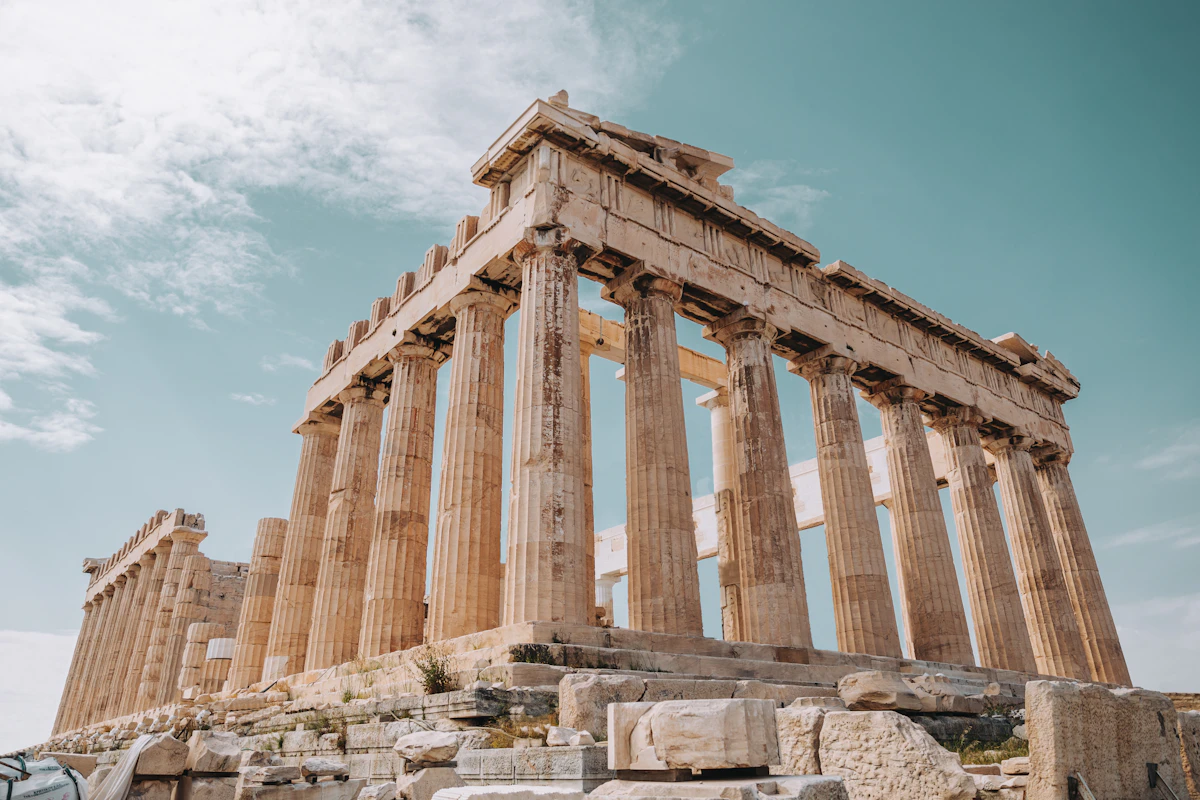
The Acropolis alone justifies a trip to Athens. But what surprises most visitors is how the ancient world keeps surfacing in unexpected places — Roman columns rising from a metro station excavation, a Byzantine church squeezed between two apartment buildings, a 2,500-year-old agora that you walk through to reach a coffee shop. History in Athens isn’t roped off in a museum. It’s the city’s texture.
Thessaloniki has its own impressive archaeology — the Rotunda, the Arch of Galerius, Byzantine churches around every corner — and its UNESCO-listed Old Town carries real weight. But if ancient Greek civilisation is what’s pulling you toward Greece in the first place, Athens is where that pull leads. There’s simply no equivalent to standing on the Acropolis hill and looking out over a city that has been continuously inhabited for 3,500 years.
For first-timers especially, walking to the Acropolis from Plaka or Monastiraki is one of those travel experiences that stays with you long after you’ve forgotten the name of every restaurant you visited.
Food: The Honest Truth
Here’s where Thessaloniki fans get loud, and honestly, they’re not wrong. Thessaloniki’s food culture is legendary among Greeks themselves. The city has strong culinary influences from its Ottoman past, its Sephardic Jewish heritage, and its position as a port city — and it shows. The bougatsa (custard-filled pastry) is better there. The seafood is extraordinary. The meze culture runs deeper.
But Athens has caught up significantly in the last decade, and in some categories, it’s now ahead. The neighbourhood restaurant scene in Psyrri and Monastiraki punches well above its weight. The street food — souvlaki, gyros, spanakopita eaten standing up — is excellent and everywhere. And Athens now has a genuine fine dining scene that Thessaloniki doesn’t quite match, including multiple internationally recognised restaurants doing creative Greek cuisine.
The practical difference? In Thessaloniki, you might stumble into extraordinary food more easily. In Athens, you have to know where to look — but when you find it, it’s worth it. The Athens street food guide for Plaka, Monastiraki, and Psyrri is a good place to start.
Call it a draw with a slight edge to Thessaloniki for raw culinary culture — and a slight edge to Athens for variety and the high end.
Nightlife: Two Very Different Evenings
Both cities stay up late. Greeks don’t eat dinner before 9pm and consider midnight a reasonable time to start the second part of the evening. But the style differs considerably.
Thessaloniki’s nightlife is younger, louder, and concentrated in dense clusters around Ladadika and the waterfront. It has a university city energy — there’s a sense that the night could go anywhere, that the bar you’re in might turn into a party, that the people around you are regulars who’ve been coming here for years.
Athens is bigger and more fragmented. You have Psyrri for creative, alternative bars. You have Kolonaki for sleek cocktail lounges. You have Gazi for clubs that run until the metro reopens. And then there are the rooftop bars with Acropolis views — which are genuinely special and not something Thessaloniki can replicate. Watching the Parthenon glow golden against a dark sky while nursing a gin and tonic is an Athens-specific experience that belongs on a short list of genuinely memorable travel moments.
Beaches: This One Isn’t Close
If beach access is a priority, Thessaloniki wins by geography. The Halkidiki peninsula is roughly an hour’s drive from the city centre, offering some of the most beautiful beaches in Greece — clear turquoise water, pine trees down to the shoreline, the kind of setting that makes you feel like you’ve accidentally found something secret.
Athens has the Athenian Riviera, which runs south from Piraeus through Glyfada and Vouliagmeni. These are perfectly pleasant beaches, easily reached by tram or bus, and Vouliagmeni’s natural lake is genuinely special. But they’re urban beaches in a way that Halkidiki is not. If you’re combining a city visit with serious beach time, Thessaloniki has the advantage.
So Which One Should You Visit First?
For most people visiting Greece for the first time, Athens is the right answer — and not just because it has the Acropolis.
Athens is Greece’s connective tissue. Its airport is the main international hub, which means most visitors pass through whether they plan to or not. Its neighbourhoods — Plaka, Monastiraki, Psyrri — give you a compressed, walkable version of everything Greek life contains: ancient history, chaotic markets, excellent food, and locals who will give you directions, recommend a restaurant, and ask where you’re from all in the same conversation.
Teams at Athenian Ascents often hear from guests who’d worried Athens would feel too big or too touristy. Almost universally, they’re surprised by how human-scaled the neighbourhoods feel, how easy it is to orient yourself around the Acropolis, and how quickly the city rewards curiosity.
Thessaloniki is the ideal second trip — when you’ve already seen the big monuments, when you want to eat and drink your way through a city without an itinerary, when you’re ready to discover why Greeks themselves often say they prefer it.
If you’re building your Athens itinerary and wondering how to use your days well, a 3-day Athens itinerary is a solid place to start before you dive into the neighbourhood-by-neighbourhood decisions.
Visit Athens first. Go deep. Then let Thessaloniki be the reason you come back.
Compare your Athens stay
View our apartments and check the total price and cancellation terms for your dates.